


晶体管分类
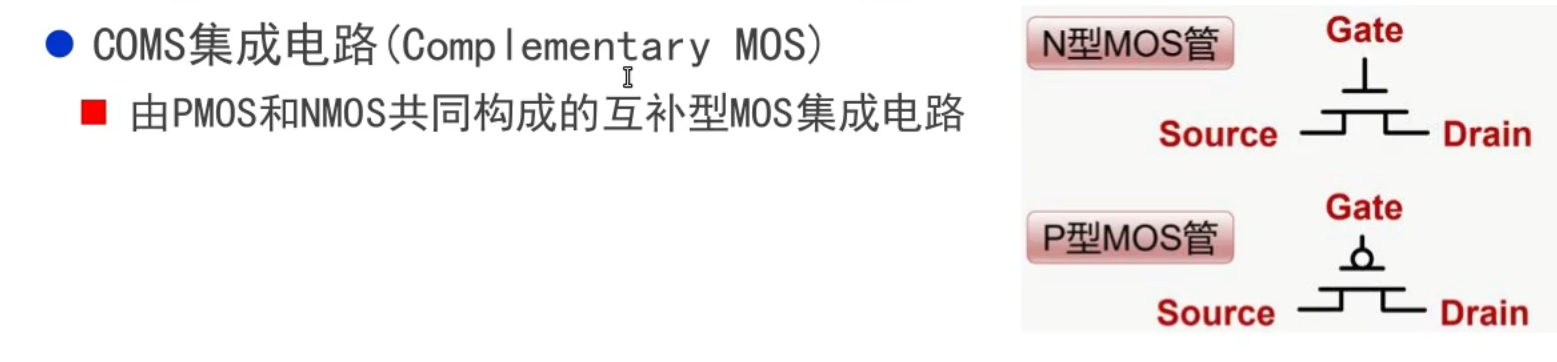
晶体管分为NMOS和PMOS, Gate端是栅极控制是否导通, 还有源极和漏极
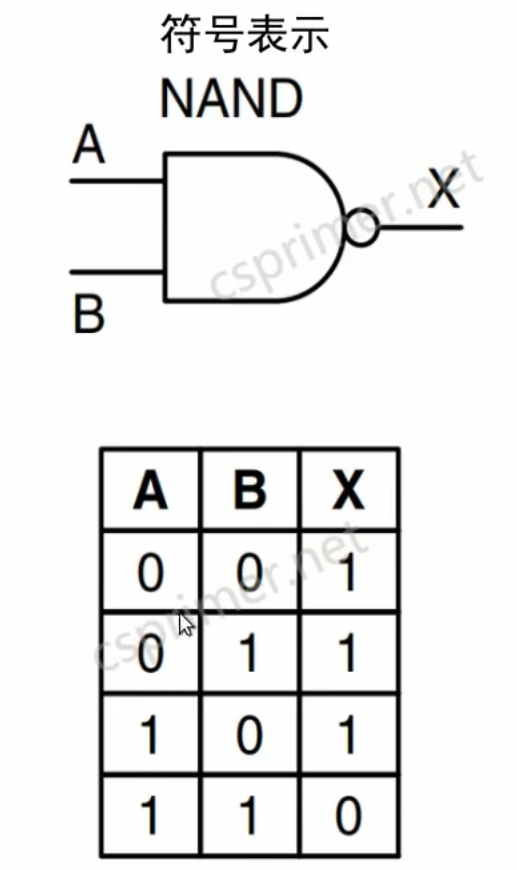
与非门的实现
晶体管实现
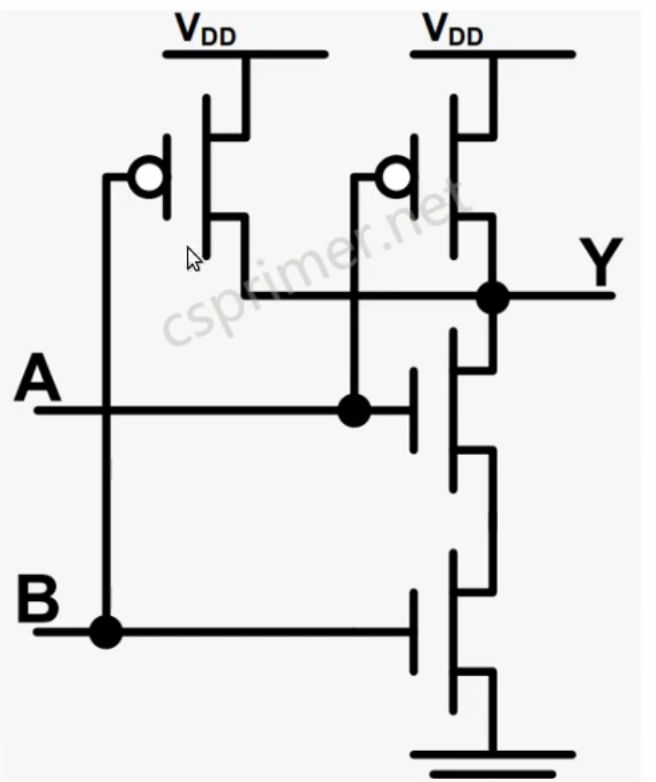
上述PMOS管输入是1, NMOS输入是地面, 输入是0
其余基本门电路
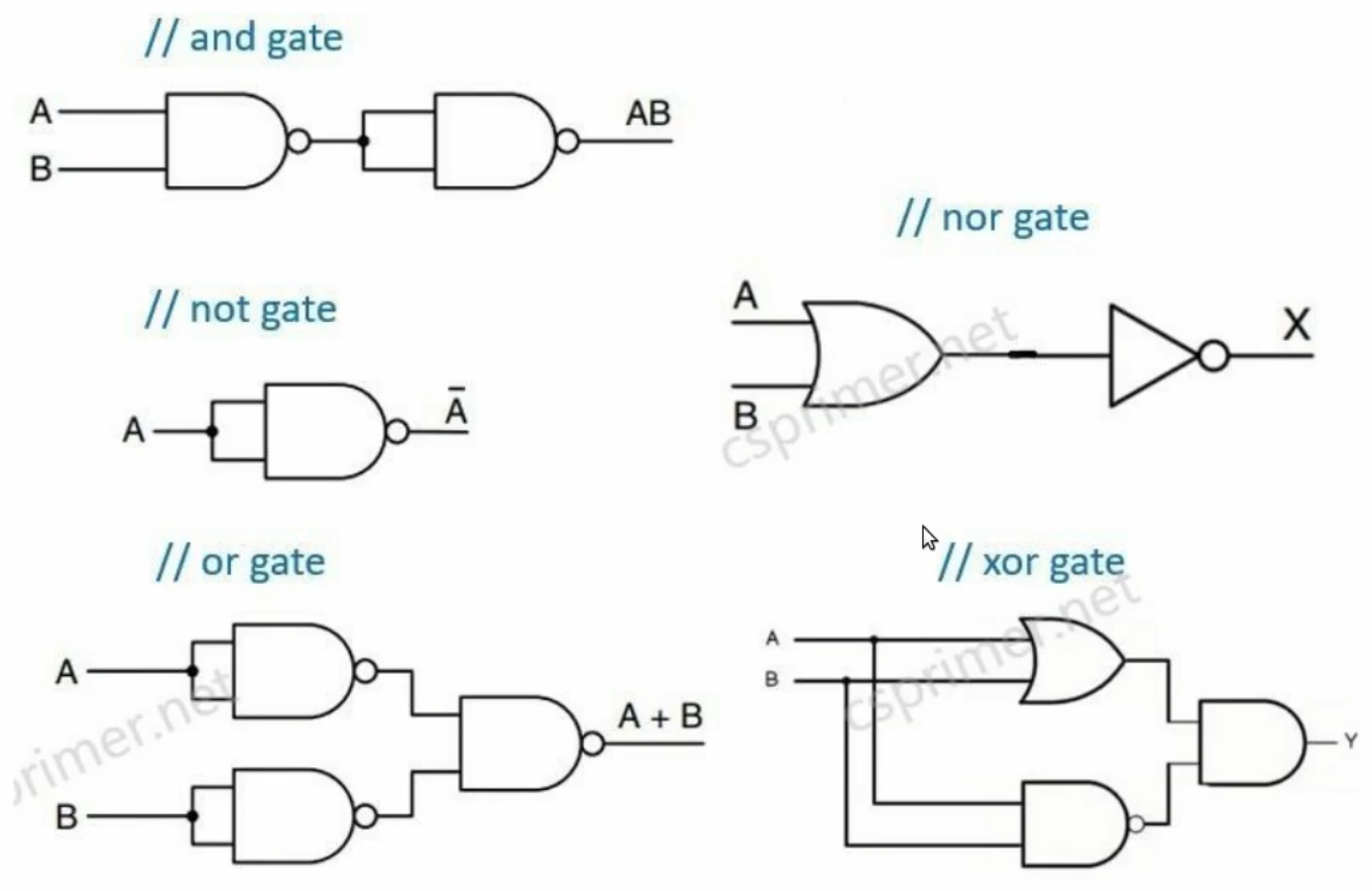
如下基本的门电路都可以由与非门组成
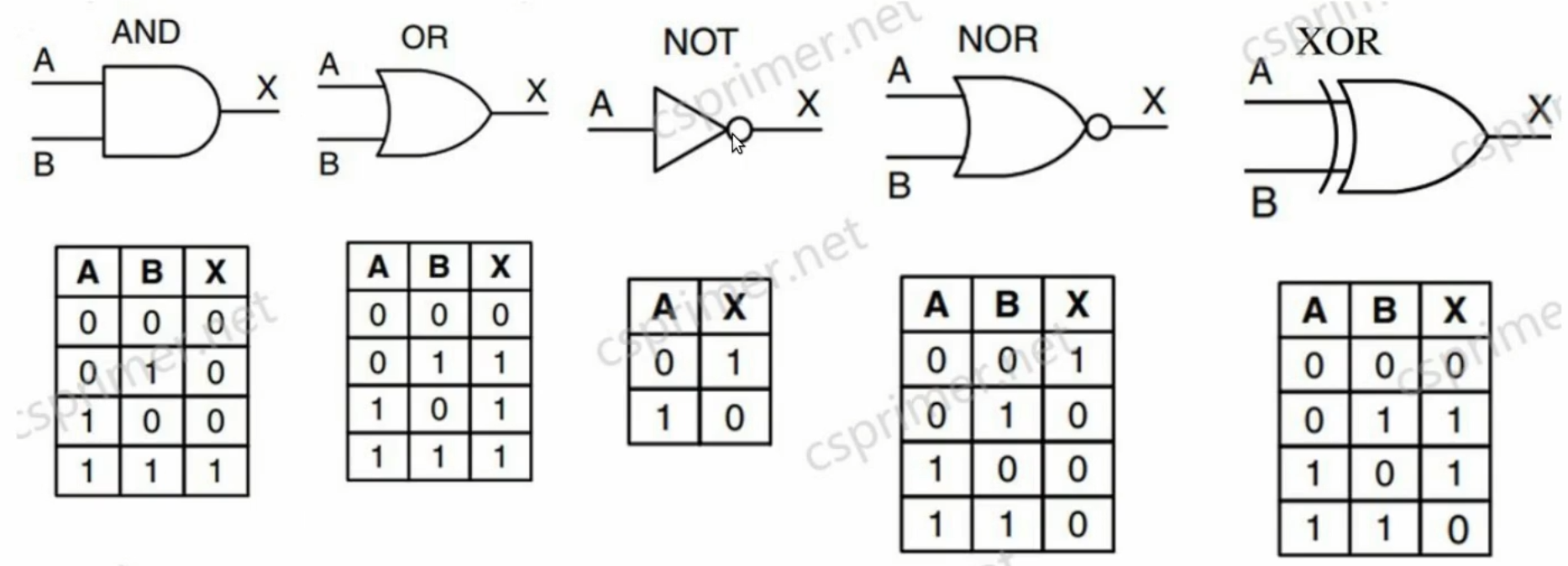
使用与非门构建其他基础逻辑门
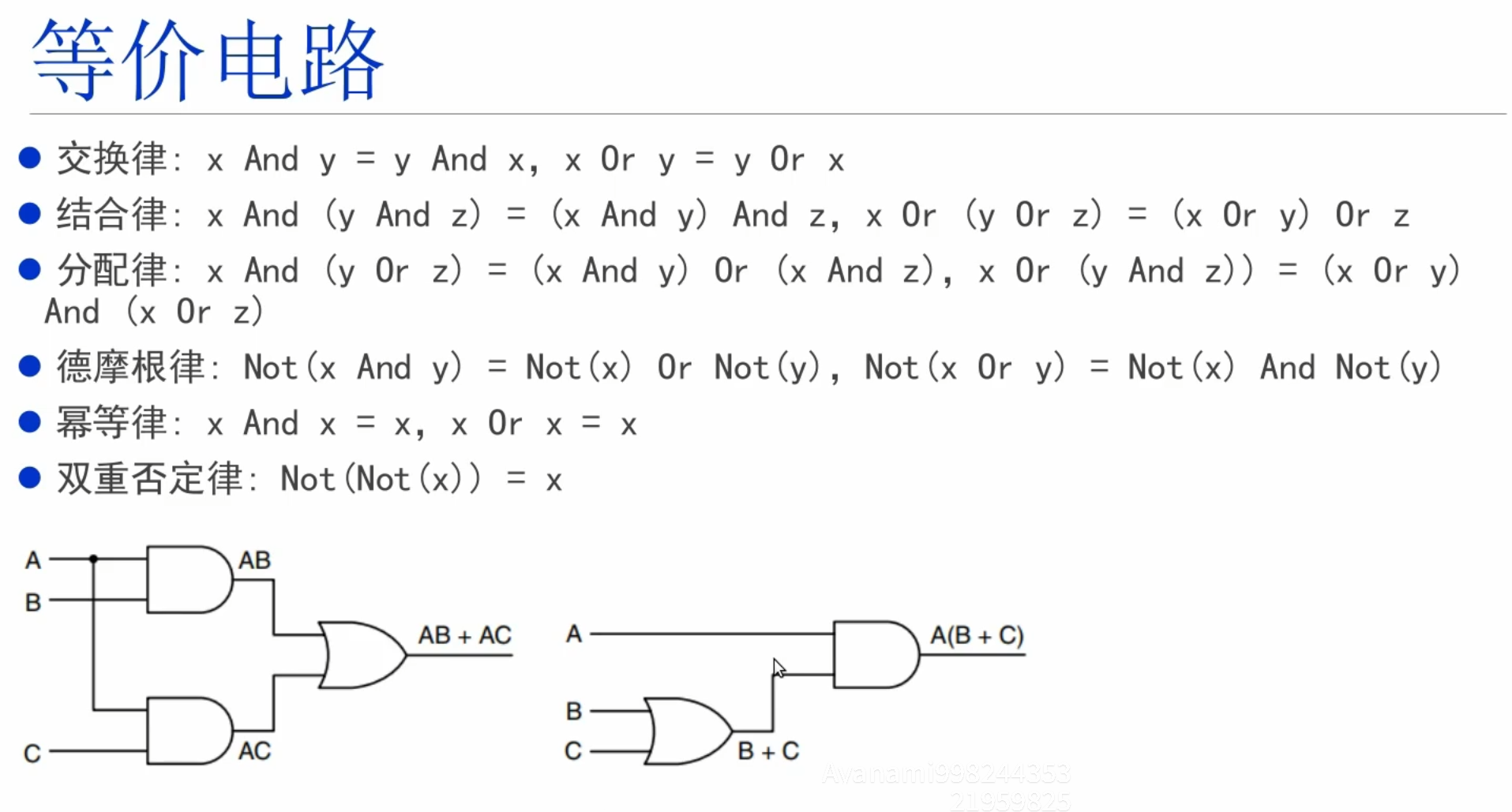
电路优化
实际设计过程中一般使用布尔运算优化电路, 减少晶体管数量
硬件描述语言HDL
HDL的语句顺序不重要, 只描述门电路之间的连接, 使用iverilog进行仿真验证
电路验证
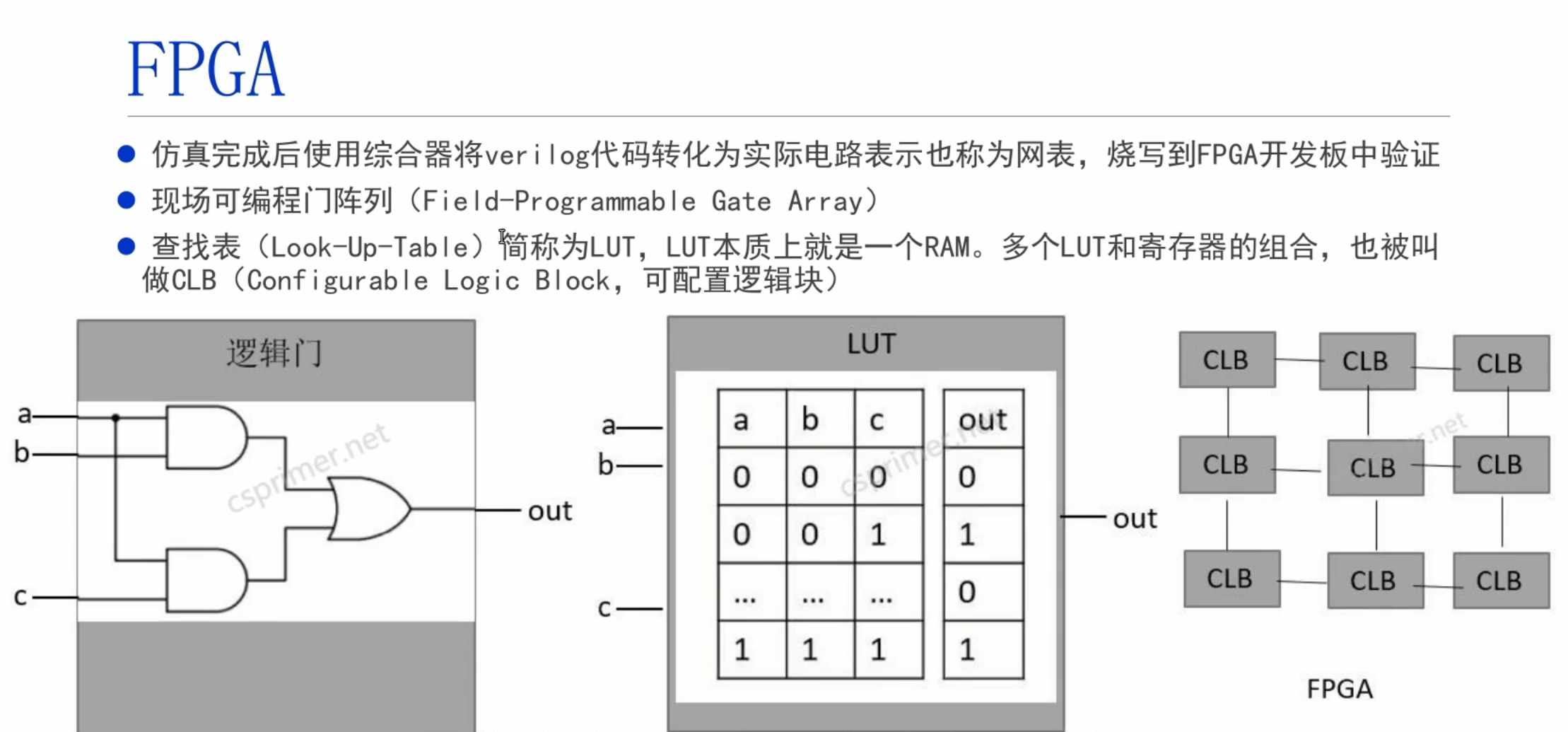
FPGA是一个查找表的结构本质是一个RAM, 可以不更改硬件焊接连接的情况测试硬件电路
使用Verilog编写逻辑门代码实现基础逻辑门
使用MOS管构建与非门
代码实现, wire代表的是连线, 类似于C语言的中间变量, 两个NMOS管串联, 两个PMOS管并联
`ifndef A_NAND_V
`define A_NAND_V

module a_nand(output o, input a, input b);
    wire w;

    supply1 vdd;
    supply0 gnd;

    pmos (o, vdd, a);
    pmos (o, vdd, b);

    nmos (w, gnd, a);
    nmos (o, w, b);
endmodule

`endif
测试
`include "a_nand.v"

module nand_tb;
    reg a, b;
    wire out;

    a_nand obj(out, a, b);

    initial begin
        // 将 $monitor 放在最开始,确保能监控到所有变化
        $monitor("Time=%0t: a=%b, b=%b, out=%b", $time, a, b, out);

        a = 0; b = 0; #10;
        a = 0; b = 1; #10;
        a = 1; b = 0; #10;
        a = 1; b = 1; #10;

        $finish;
    end
endmodule
使用与非门构建与门
代码实现
`ifndef A_AND_V
`define A_AND_V

`include "a_nand.v"

module a_and(output o, input a, b);
   wire w;
   a_nand a1(w, a, b);
   a_nand a2(o, w, w);
endmodule;

`endif // A_AND_V
测试
`include "a_and.v"

module and_tb;
   reg a, b;
   wire out;

   a_and obj(out, a, b);

   initial begin
       // 将 $monitor 放在最开始,确保能监控到所有变化
       $monitor("Time=%0t: a=%b, b=%b, out=%b", $time, a, b, out);

       a = 0; b = 0; #10;
       a = 0; b = 1; #10;
       a = 1; b = 0; #10;
       a = 1; b = 1; #10;

       $finish;
   end
endmodule
与非门构建或门
代码实现
`ifndef A_OR_V
`define A_OR_V

`include "a_nand.v"

module a_or(output o, input a, b);
    wire w1, w2, w3;
    a_nand n1(w1, a, a);
    a_nand n2(w2, b, b);
    a_nand n3(o, w1, w2);
endmodule;

`endif
测试
`include "a_or.v"

module or_tb;
    reg a, b;
    wire out;

    a_or obj(out, a, b);

    initial begin
        // 将 $monitor 放在最开始,确保能监控到所有变化
        $monitor("Time=%0t: a=%b, b=%b, out=%b", $time, a, b, out);

        a = 0; b = 0; #10;
        a = 0; b = 1; #10;
        a = 1; b = 0; #10;
        a = 1; b = 1; #10;

        $finish;
    end
endmodule
与非门构建非门
代码实现
`ifndef A_NOT_V
`define A_NOT_V
`include "a_nand.v"

module a_not(output o, input a);
    a_nand n1(o, a, a);
endmodule;

`endif // A_NOT_V
测试
`include "a_not.v"

module not_tb;
    reg a;
    wire out;

    a_not obj(out, a);

    initial begin
        // 将 $monitor 放在最开始,确保能监控到所有变化
        $monitor("Time=%0t: a=%b, out=%b", $time, a, out);

        a = 0; #10;
        a = 0; #10;
        a = 1; #10;
        a = 1; #10;

        $finish;
    end
endmodule
构建或非门
代码实现
`include "a_or.v"
`include "a_not.v"

module a_nor(output o, input a, b);
    wire w;
    a_or o1(w, a, b);
    a_not n1(o, w);
endmodule
测试
`include "a_nor.v"

module or_tb;
    reg a, b;
    wire out;

    a_nor obj(out, a, b);

    initial begin
        // 将 $monitor 放在最开始,确保能监控到所有变化
        $monitor("Time=%0t: a=%b, b=%b, out=%b", $time, a, b, out);

        a = 0; b = 0; #10;
        a = 0; b = 1; #10;
        a = 1; b = 0; #10;
        a = 1; b = 1; #10;

        $finish;
    end
endmodule
构建异或门
代码实现
`ifndef A_XOR_V
`define A_XOR_V

`include "a_and.v"
`include "a_or.v"
`include "a_not.v"

module a_xor(output o, input a, b);
    wire a1, b1;
    a_not n1(a1, a);
    a_not n2(b1, b);
    wire val1, val2;
    a_and and1(val1, a1, b);
    a_and and2(val2, a, b1);
    a_or or1(o, val1, val2);
endmodule

`endif
测试
`include "a_xor.v"

module xor_tb;
    reg a, b;
    wire out;

    a_xor obj(out, a, b);

    initial begin
        // 将 $monitor 放在最开始,确保能监控到所有变化
        $monitor("Time=%0t: a=%b, b=%b, out=%b", $time, a, b, out);

        a = 0; b = 0; #10;
        a = 0; b = 1; #10;
        a = 1; b = 0; #10;
        a = 1; b = 1; #10;

        $finish;
    end
endmodule

 京公网安备 11010502036488号